
Bowing basement wall repair in Springfield runs $2,500–$10,000 for most homes — carbon fiber from ~$350 per strap, anchor and beam systems above. On the plateau, storm water perches in thin clay right at wall depth, and walls along karst drainage paths carry the wettest loads in the Ozarks.
Reading deflection, choosing restraint, and why the water plan is half the fix.
The perched-water problem
Flatland metros soak storms downward; the plateau can't — limestone doesn't absorb on schedule. So rain charges the thin clay blanket and stays there, at exactly the depth your basement wall works. Weeks of wet mean weeks of lateral push; block answers along a mortar course at mid-height, then leans. Houses near losing streams and karst swales get the concentrated version, because that's where the underground routes its traffic. Sight down your wall after a wet month — the bulge, if it's coming, shows there first.
Restraint by the numbers
| Measured movement | System | Notes for plateau lots |
|---|---|---|
| < ~2 inches | Carbon fiber | Bonded tension strength; movement ends where it stands |
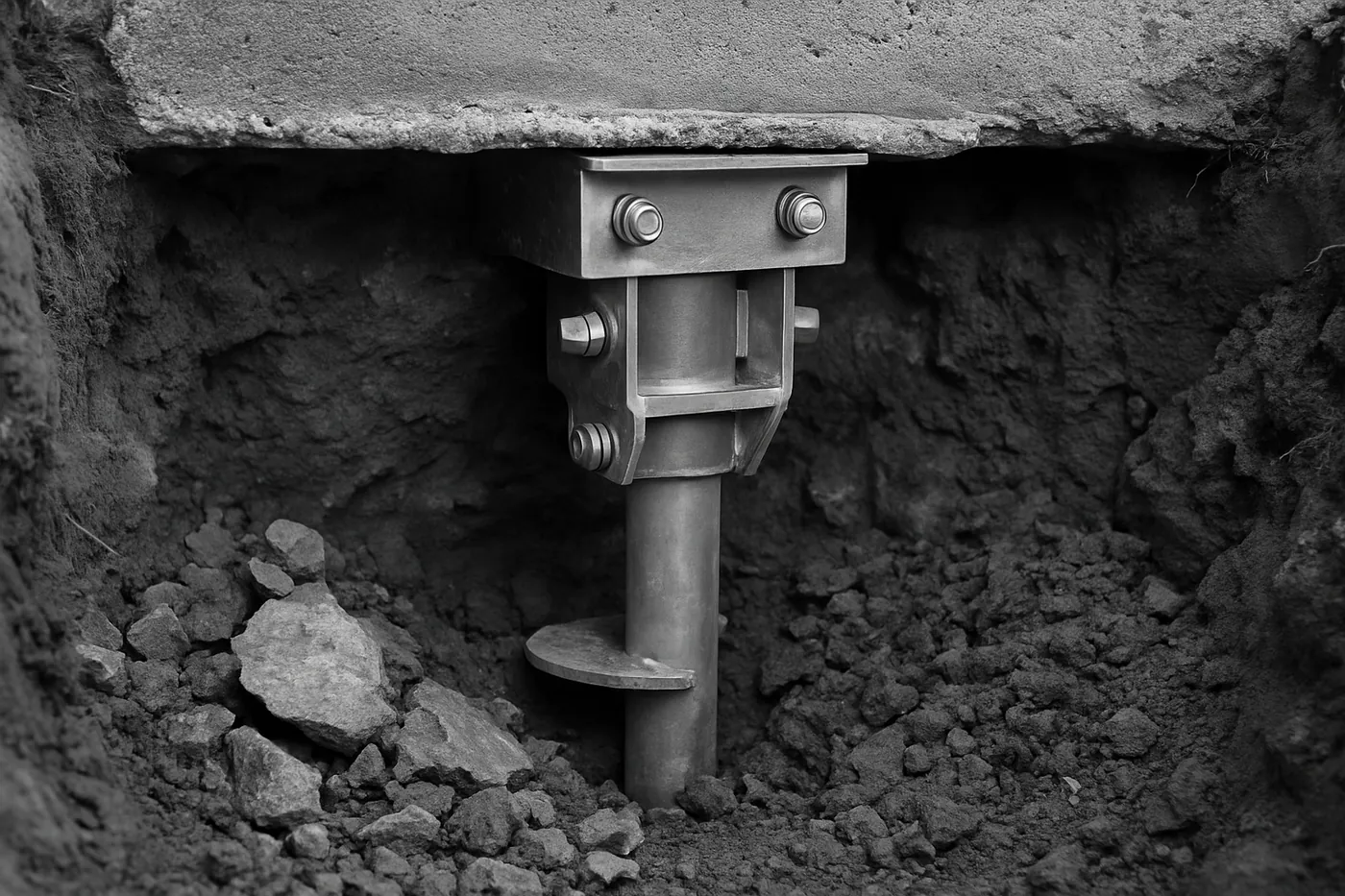
| Moderate | Plate anchors | Yard anchor placement checked against rock and mapped features first |
| Moderate, tight access | Steel I-beams | Interior install; no digging into surprises |
| Severe | Straighten / rebuild | Quoted plainly when the wall is past trusting |
Every system installs with a written transferable warranty and ships with its deflection readings — audit-ready for any second opinion.
Then reroute the siege
The wall bowed because perched water kept it loaded. Our scopes pair restraint with exits: downspouts carried genuinely away from the charged zone, grading rebuilt to shed, and where the clay layer stays chronically wet, perimeter relief that drains the perch itself. On karst ground the water will keep arriving — the fix is making sure it stops arriving at your wall.
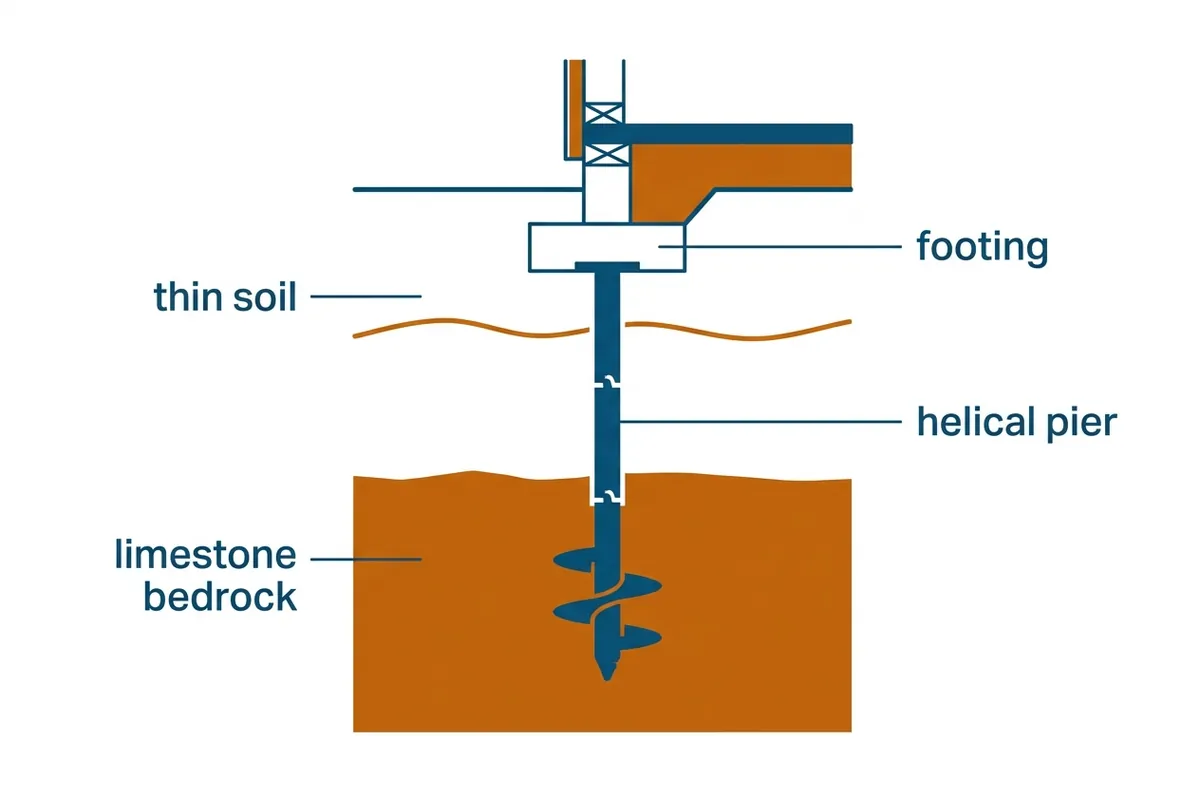
The perched-water wall: how thin soil over rock loads block
Springfield's wall problem has a plateau signature. Because only a few feet of soil sit over limestone, storm water can't soak deep — it perches on the rock and moves sideways, and a basement cut into that geometry becomes the low point the perch drains toward. The wall takes the hit as hydrostatic push concentrated in the storm season: horizontal cracking at mid-height in block, shear at the bottom course, the familiar grammar written with a local accent.
The repair grammar matches anywhere — carbon fiber under an inch of deflection, steel braces or anchors past it — but the sequencing is even less negotiable here than in deep-clay metros: intercept the perch first. A wall braced while the rock still delivers every storm to its footing is steel arguing with plumbing. Our wall scopes carry the drainage line item first and the restraint line second, priced separately so you can see which dollars buy which physics.
Wall questions, straight answers
Why do Springfield basement walls bow?
Perched water. Thin clay over limestone means rain that can't soak into rock sits in the clay layer — right at basement-wall depth — and swells against block. Walls near karst drainage paths get the wettest clay and bow first. The horizontal mid-height crack is the tell here like everywhere in Missouri.
What does wall repair cost in Springfield?
$2,500-$10,000 covers most walls: carbon fiber from about $350 a strap early, anchors and steel beams for real deflection, excavation beyond that. Measured inches pick the system; the free evaluation brings the gauge.
Which restraint system fits a plateau house?
Same menu as anywhere, chosen by deflection: fiber under ~2 inches, anchors where the yard allows an earth anchor, I-beams where it doesn't. One plateau note: anchor placement respects what's behind the yard — we're not augering into a rock shelf or a mapped feature, and we check before we spec.
Will fixing the wall stop the spring dampness too?
Restraint stops movement; drainage stops the cause. On perched-water lots we pair them by default — grade and gutters minimum, perimeter relief where the clay layer stays chronically charged. It's the difference between bracing a wall and ending its siege.
How fast does bowing progress here?
Quietly, then quickly after wet years. A quarter inch a season is typical; a stormy spring can double it. The strap-price window is real and it closes by the inch — a free measured baseline is how you know which side of it you're on.
Get a free Springfield foundation evaluation
Tell us what the house is doing — cracks, sinking corners, doors gone stubborn, water where it shouldn’t be — and we'll schedule an evaluation with photos and crack measurements. We reply the same business day.