
Foundation repair in Springfield costs $3,800–$12,500 for most structural jobs — and the plateau's shallow limestone keeps many at the low end: piers reaching rock in 8–20 feet cost less than deep-clay metros pay. Crack injection runs from $400, drainage $2,500–$8,000, piers $1,200–$3,000 each.
The full table, the karst ledger — what the rock saves and what it spends — and the bid question unique to this metro.
Springfield prices by repair
| Repair | Typical range | Plateau note |
|---|---|---|
| Crack injection (each) | $400–$800 | Fall timing beats spring urgency |
| Carbon fiber straps (each) | $350–$700 | Early perch-pressure walls qualify |
| Wall restraint (per wall) | $2,500–$10,000 | Anchor placement checked against rock |
| Drainage + sump | $2,500–$8,000 | Discharge walked against karst intakes |
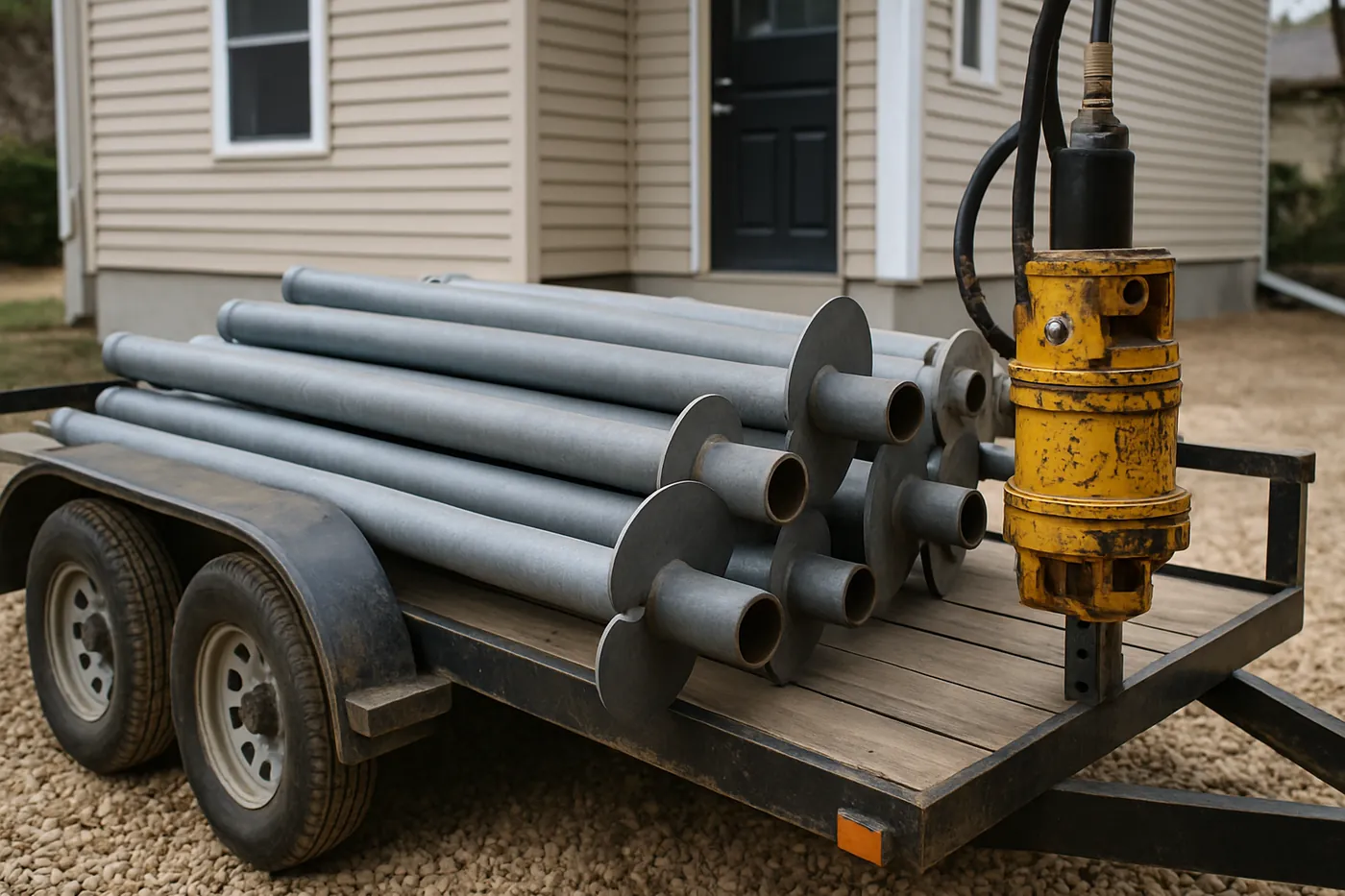
| Steel piers (each) | $1,200–$3,000 | Often 8–20 ft to refusal — the local discount |
| Full underpinning | $4,000–$15,000 | Karst-flagged jobs spec deeper, priced openly |
| Concrete leveling | $500–$2,500 | Includes the free karst-pattern glance |
Ranges reflect Missouri and regional contractor pricing; written scopes carry fixed line-item prices after the free evaluation.
The karst ledger
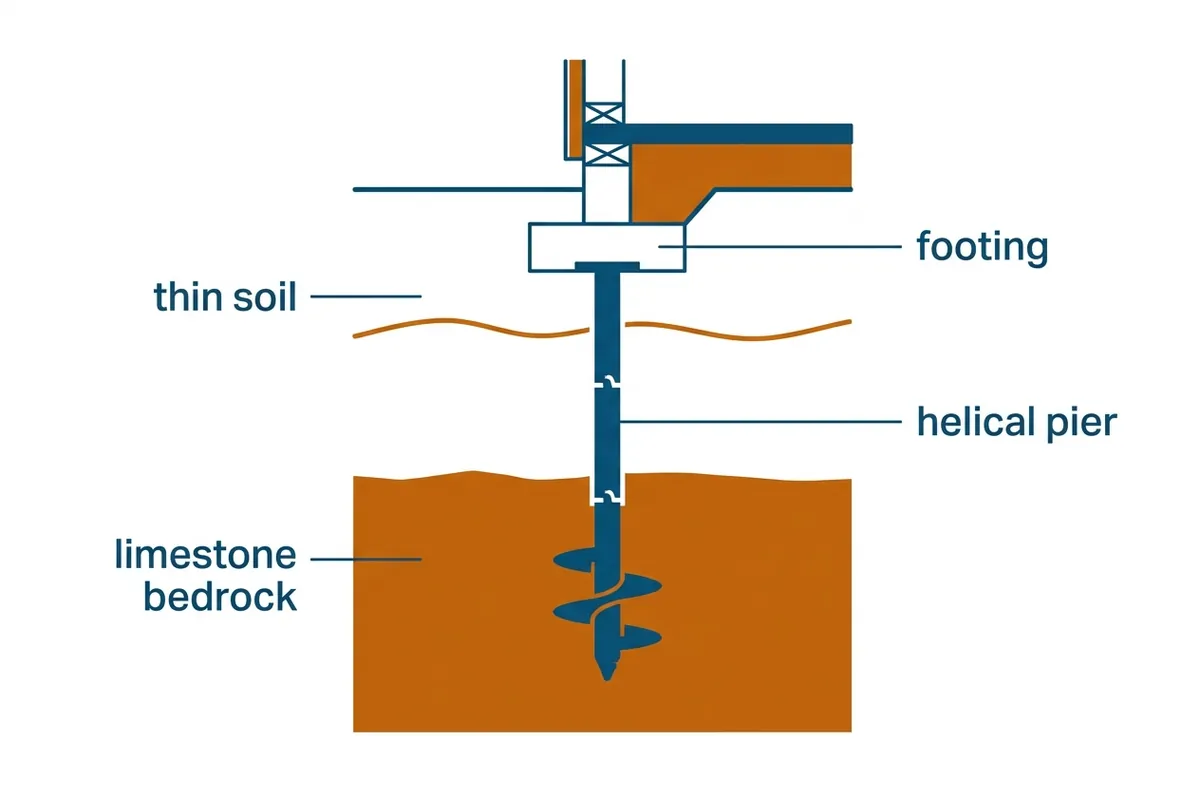
- What the rock saves you: pier depth. Refusal at 12 feet instead of 25 is the difference between a $6,000 underpinning and a $10,000 one, and much of the metro banks that discount on ordinary settlement jobs.
- What the rock spends: verification. Karst-flagged patterns buy drive-log scrutiny, occasional deeper advances past suspect benches, and discharge routing that respects the underground — disclosed line items, never surprises.
- What flat metros never budget: the geology read itself. Here it's part of every evaluation, free, because on this plateau a repair priced without it is a repair priced blind.
The bid question unique to Springfield
Everywhere, good bids name system, count, measurements, and warranty. Here, add the fifth question: “What's your read on the movement pattern — clay-ordinary or karst-flagged — and why?” A bidder without an answer hasn't finished looking. A bidder whose answer is always the expensive one has finished looking at your wallet. The honest answer sounds like evidence: rain correlation checked, locality mapped, drive depths reasoned. Ours arrives in writing on page one.
Early money beats emergency money
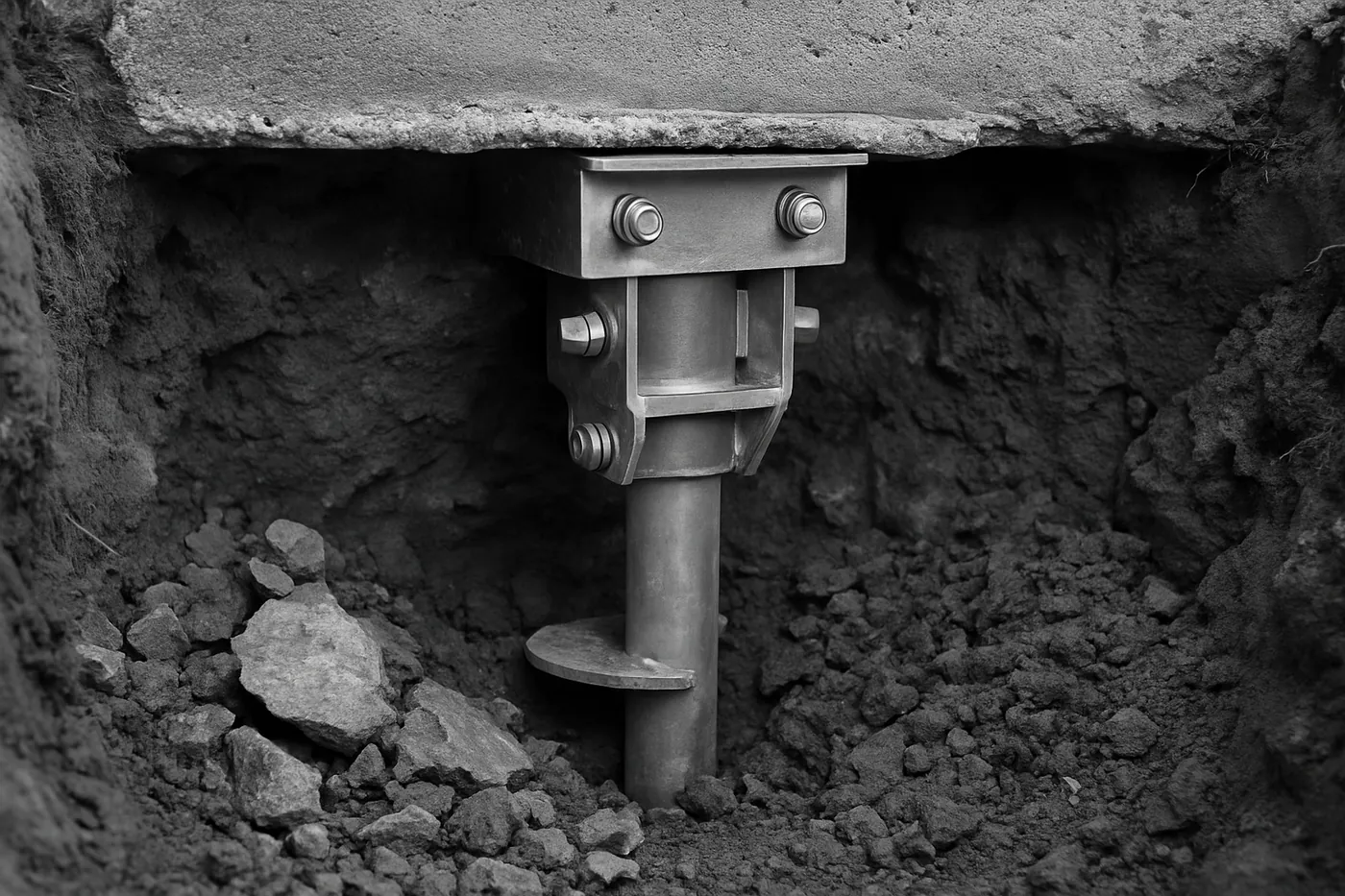
The plateau compounds like everywhere — unsealed cracks pay winter interest, undrained perches pay pressure interest — with one local accelerant: karst-fed problems occasionally skip the slow chapters. Which is the whole argument for the free measured baseline: an hour of instruments now prices today's step, catches the rare fast-mover early, and turns every future decision into a comparison against numbers instead of memories.
Cost questions, straight answers
What does foundation repair cost in Springfield, MO?
Missouri's structural band — $3,800-$12,500 — holds for most Springfield jobs, and shallow rock keeps plenty at the friendly end: piers $1,200-$3,000 each often seat in 8-20 feet, crack injection from $400, drainage $2,500-$8,000. Karst-complicated work can exceed the band, and gets said plainly when it will.
Is repair cheaper here because rock is close?
Frequently, yes — pier feet are pier dollars, and the plateau's thin soils mean fewer feet to refusal than deep-clay metros pay for. The savings is real on ordinary settlement. It narrows when a carved zone deepens the profile, which drive logs reveal honestly.
Does 'karst' automatically mean expensive?
No — it means diagnosed. Most plateau settlement is ordinary clay-cycle work at ordinary prices. The karst premium only exists where the pattern (fast, local, rain-triggered) justifies deeper piers, investigation, or rerouted drainage — and that premium is disclosure-first in our scopes, never a surprise line.
What's the highest-leverage cheap fix on the plateau?
Discharge honesty: downspouts and sump lines routed where the underground can't recycle them, plus grade that sheds the perch. Hundreds of dollars, and it discounts every structural line that water would otherwise fund. Second place: fall injection on open cracks.
What paperwork should any Springfield bid include?
System name, unit count, the measurements justifying it, warranty terms — and here, one more line: the geology read. A bid that doesn't say whether your movement pattern is clay-ordinary or karst-flagged hasn't finished diagnosing. Ours opens with exactly that page.
Figures reviewed July 2026. Sources you can check: The soil and geology claims on this page are checkable against primary sources: see Missouri Geological Survey and USDA Web Soil Survey.
Get a free Springfield foundation evaluation
Tell us what the house is doing — cracks, sinking corners, doors gone stubborn, water where it shouldn’t be — and we'll schedule an evaluation with photos and crack measurements. We reply the same business day.