
Foundation crack repair in Springfield costs $400–$1,500 for injection and reinforcement. On karst ground, crack triage carries an extra question — did it follow the rain? — because storm-correlated cracks can report underground fines movement, and those get investigation, not just sealant.
The plateau's crack taxonomy, real injection work, and the storm-diary habit worth keeping.
Crack triage with a weather column
| Presentation | Likely story | Response |
|---|---|---|
| Vertical hairline, poured wall | Curing shrinkage | Seal; monitor casually |
| Diagonal, widening by season | Clay-cycle settlement | Measure; pier conversation if live |
| Horizontal, mid-wall | Perched-water pressure | Restraint evaluation, promptly |
| Appears/widens after storm weeks | Possible karst fines movement | Karst-aware evaluation before any cosmetic fix |
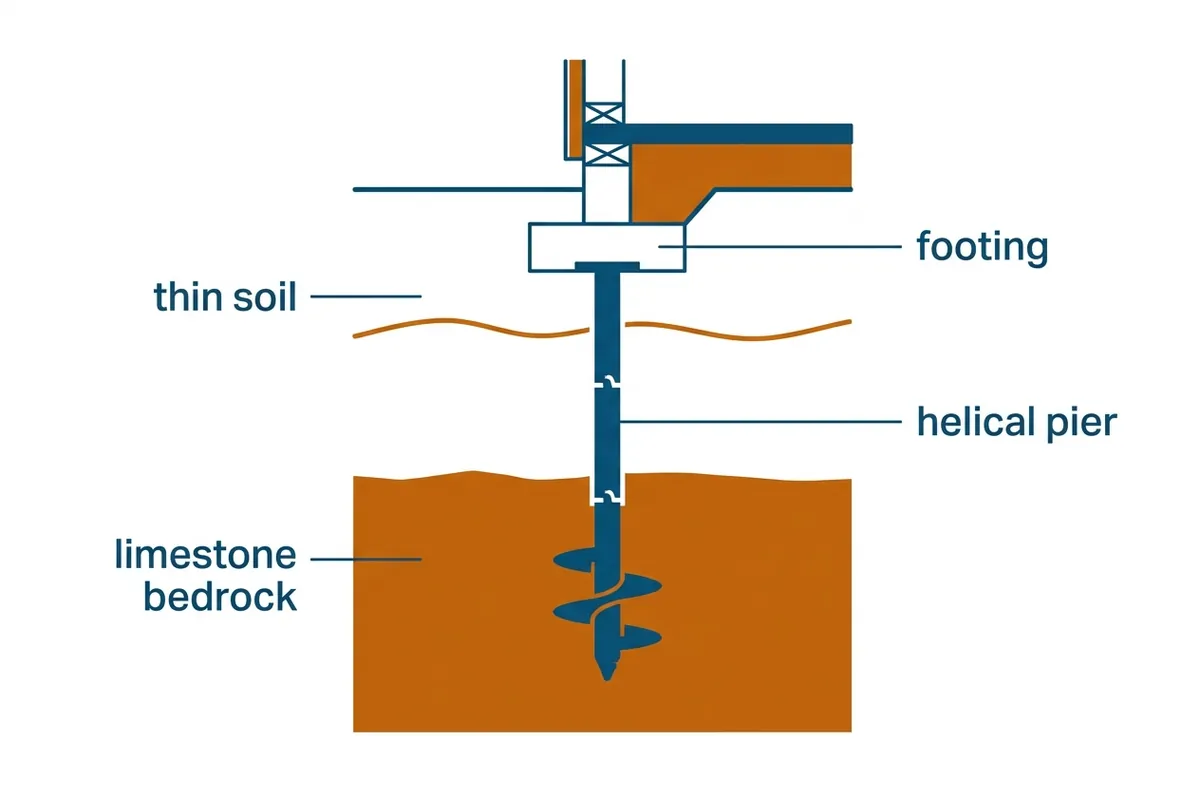
Injection that respects the ground
Cracks live through the wall, so repairs do too. Polyurethane takes the wet and the restless — injected to chase water through the full depth, expanding, curing flexible for a wall that will see more seasons. Epoxy rebinds the dormant to better-than-original strength. Movement-history cracks get carbon staples across the line. And every repair is logged — width, photo, date — because on this plateau a crack log with a weather column is genuinely diagnostic equipment.
Keep the storm diary
Our best Springfield diagnoses start with homeowners who noticed when. A crack that tracks the calendar is clay; a crack that tracks the rain gauge is plumbing. Pencil-date the ends, note the week's weather at each check, and bring the diary to the free evaluation — it converts an hour of instruments into a verdict with history behind it. Half the time the story is benign and the report says so. The other half, you just caught the plateau doing something early.
Ordinary cracks, karst cracks, and telling them apart
Most Springfield cracks are ordinary: shrinkage lines in poured walls, seasonal racking at openings, storm-fed leaks at the cove. They get the standard triage — polyurethane where water moves and movement is seasonal, epoxy where an engineer wants structural transfer, carbon staples across anything with a history. The plateau adds one non-standard question the rest of Missouri doesn't ask as often: is this crack a karst symptom? Fines washing into dissolution features settle foundations from below, and their cracks behave differently — localized to one corner or run, trending rather than cycling, sometimes accelerating.
That's why crack evaluation here logs pattern, width, and season, and why "monitor with a dated pencil mark" is a legitimate first prescription. Injection is cheap and permanent when the crack's cause is finished moving; it's a bandage when the ground below is still subtracting. The free evaluation reads which one you have — and if the answer points below the footing, we say so before selling you a syringe.
Crack questions, straight answers
Which Springfield cracks deserve fast attention?
Rain-correlated ones lead the list here — a crack that appears or widens after storm weeks may be reporting underground fines movement, which is karst's calling card. Then the usual hierarchy: horizontal wall cracks (pressure), widening diagonals (settlement), and vertical hairlines (usually shrinkage wanting a seal).
What does crack repair cost?
$400-$800 per injected crack, $700-$1,500 with carbon stitching. If the pattern suggests karst-fed movement, we'll say the honest thing: injection treats the symptom and the real scope is piers plus water rerouting. No serial-injection subscriptions sold here.
Epoxy or polyurethane for Ozarks walls?
Water decides: polyurethane for wet or seasonal cracks — it chases moisture and stays flexible; epoxy for dormant cracks needing structural rebinding. Plateau bonus consideration: cracks that wet from below (karst groundwater) always get the flexible answer.
Do I need to worry about every hairline?
No — thin vertical lines in poured concrete are usually curing shrinkage, common in every subdivision from Nixa to Marshfield. Seal them so water can't recruit them, then relax. The monitoring habit — dated pencil marks, quarterly width checks — sorts the rest.
What if a crack keeps reopening?
That's testimony, not bad luck. Reopening means movement — clay cycling at best, migrating support at worst — and the measured evaluation (laser levels, deflection, water walk, weather history) finds which. Re-injecting a reopening crack without that answer is paying to silence a witness.
Get a free Springfield foundation evaluation
Tell us what the house is doing — cracks, sinking corners, doors gone stubborn, water where it shouldn’t be — and we'll schedule an evaluation with photos and crack measurements. We reply the same business day.