
Concrete leveling in Springfield costs $500–$2,500 for most driveways, walks, and patios — roughly a third of replacement, same-day traffic. Plateau slabs sink for the usual bedding reasons plus one local wrinkle: storm water headed for karst drainage moves fines with unusual efficiency.
Why flatwork settles here, the afternoon procedure, and the slab-to-karst triage we run free while on site.
Bedding failure, plateau edition
Most sunken Springfield concrete is honest bedding failure: builder fill compacting for a decade, joints admitting storm water that washes fines, a downspout mining one slab edge since the Clinton administration. The plateau's addendum is efficiency — where surface water heads toward the underground's intakes, it moves soil particles with it, and slabs over those paths settle faster and more locally than the driveway across the street. Same physics as the region's foundations, at flatwork scale and flatwork prices.
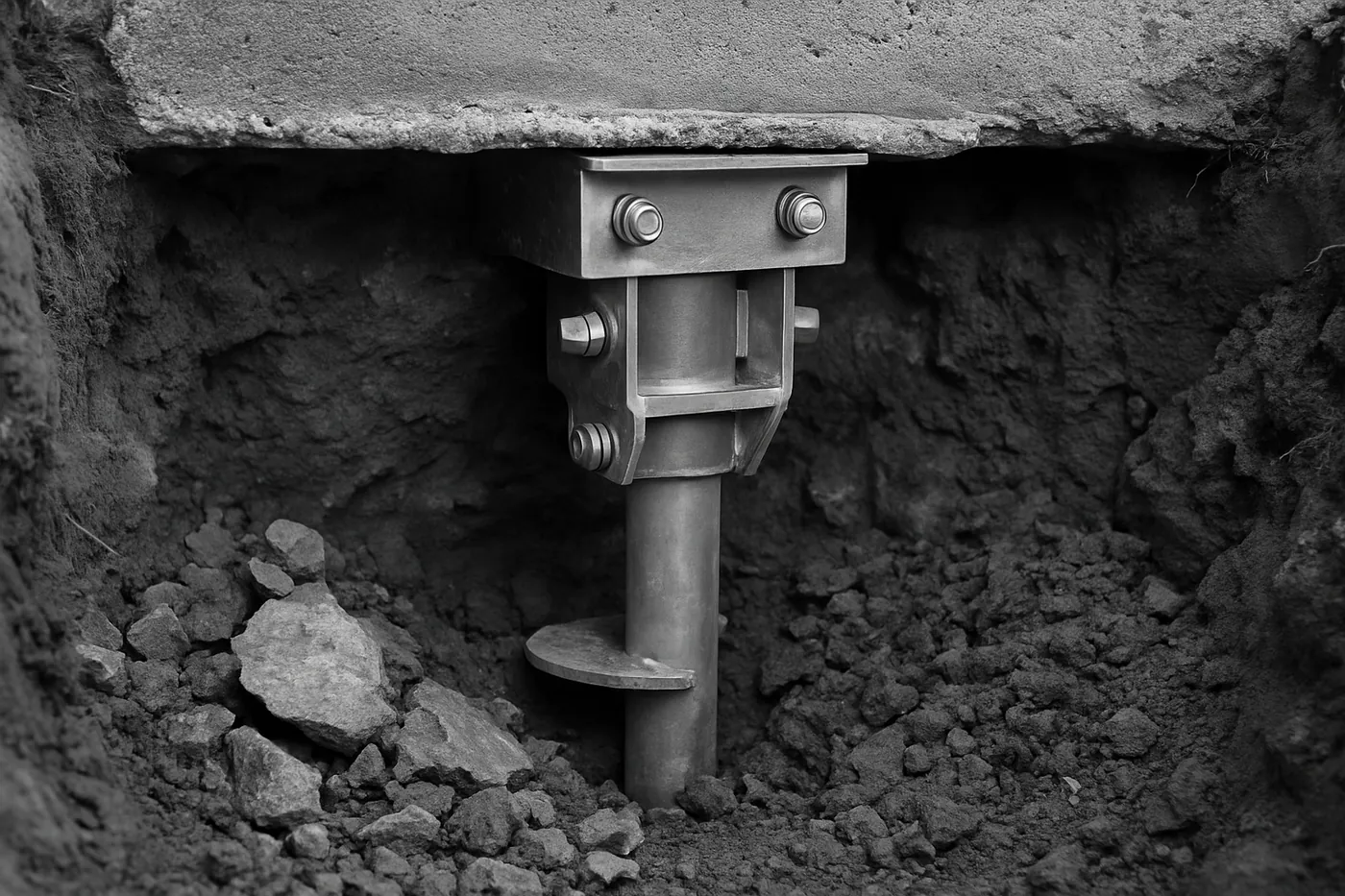
The afternoon, in three verbs
- Drill — coin-size ports through the settled sections
- Inject — structural foam expands beneath, filling the void and floating the slab up in controlled increments
- Seal — ports patched, joints caulked, the water shown the door
| Path | Cost | Downtime | Fixes the bed? |
|---|---|---|---|
| Foam leveling | $500–$2,500 | Hours | Yes — filled and sealed |
| Replacement | $2,500–$8,000+ | Days + cure | No — new slab, same bed |
| Waiting | Free today | — | The void keeps shopping |
The free glance that matters here
Every slab visit on this plateau includes the look flatland crews skip: is this settlement ordinary, or is it fast, local, and rain-correlated? A patio tipping toward the house is already a drainage errand; a slab dropping on karst's schedule earns the structural conversation before it graduates. Nearly always the news is good and the lift proceeds — but on this ground, looking is the professional minimum.
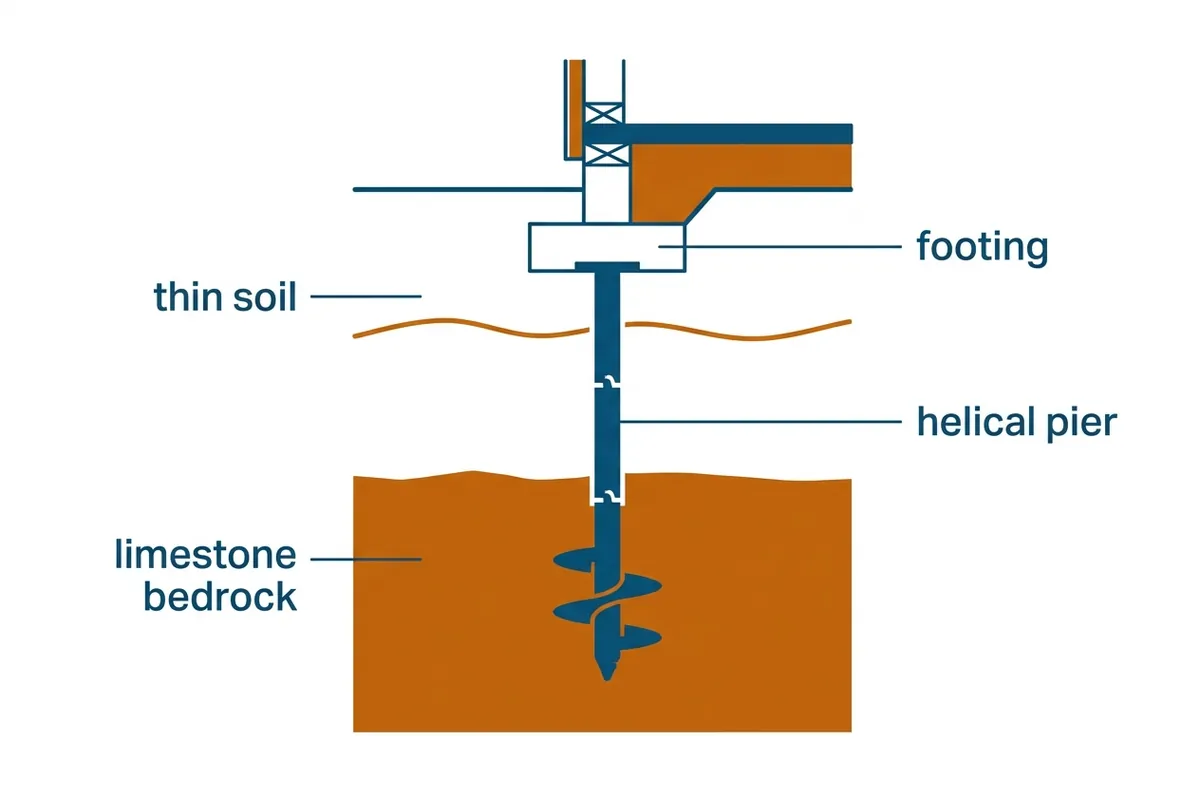
Lifting slabs where the ground is thin
Slab settlement in Springfield splits into two species, and the split decides everything. The common species is honest fill settlement: builder backfill around a new foundation, utility trenches, the loose soil under a driveway edge consolidating for a decade — polyurethane lifts these in an afternoon at $500–$2,500, ports the size of pennies, parked-on by dinner. The rarer species is subtraction from below: fines migrating into a karst feature, a low spot that returns after every lift, a slab corner whose settlement accelerates instead of tapering. The plateau's ~8,000 mapped sinkholes are why we treat "the same panel again" as a diagnostic fact rather than a repeat sale.
Practical rule from the evaluation: first-time settlement over known fill gets lifted with confidence; recurring settlement in the same footprint gets a harder look — probe data, photo history, sometimes a geologist referral under the county's own sinkhole-mapping rules — before more foam goes down. Lifting honestly sometimes means declining to lift twice.
Leveling questions, straight answers
What does concrete leveling cost in Springfield?
$500-$2,500 for most residential lifts — driveways, walks, patios, garage aprons — versus $2,500-$8,000+ to tear out and repour. Foam lifts carry traffic the same afternoon.
Why do slabs sink on the plateau?
Mostly the ordinary reasons — builder fill consolidating, joints washing fines, downspouts mining slab edges. The plateau adds a sharper version: storm water moving toward karst drainage can carry fines with real efficiency, and slabs over those paths settle faster than their neighbors.
When is a sunken slab a bigger warning here?
When it's fast, local, and rain-correlated — the same triage as foundations. A walk that settled an inch over five years is bedding; a slab corner that dropped noticeably after a storm month gets a karst-aware look while we're there, free. Usually it's just bedding.
Foam or mudjacking for Ozarks slabs?
Foam for nearly all residential work: small ports, minutes to cure, no washout, negligible added weight — the last point mattering over soils that already move fines. Slurry keeps its place for big voids under heavy slabs. The quote names which and why.
How do I keep the lift permanent?
Close the water routes: joints caulked, ports sealed, downspouts moved off the slab's bed, grade shedding away. On this plateau that last item does double duty — water you keep off the slab is water you keep out of the underground's local economy.
Get a free Springfield foundation evaluation
Tell us what the house is doing — cracks, sinking corners, doors gone stubborn, water where it shouldn’t be — and we'll schedule an evaluation with photos and crack measurements. We reply the same business day.