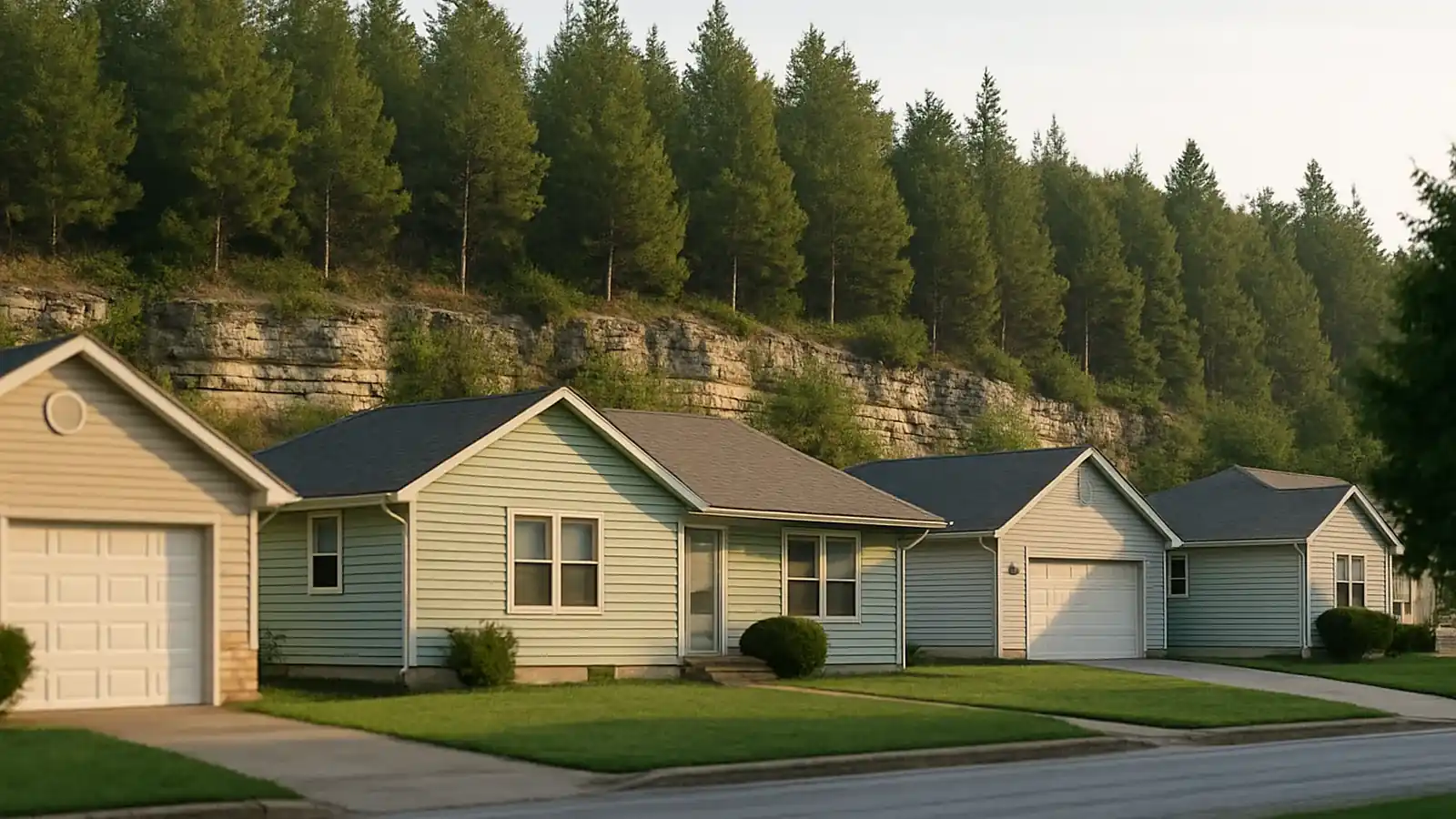
Willard homeowners see most structural repairs land in the $3,800–$12,500 range, with smaller scopes from a few hundred dollars. Any Willard figure should follow an evaluation that measures the house and accounts for the clay and rock beneath it.
Open ground, honest cycles
Willard's mix (older farm properties, 1990s-2020s subdivisions, long horizons) sits on open plateau where the thin clay runs its full seasonal amplitude: charged hard by spring, baked hard by August, with little canopy to soften either. Foundations get the unedited cycle, and the local grammar follows: corner hairlines that breathe with the seasons, garage-corner diagonals on the fill schedule, and stoops that heave in the shallow-frost winters.
Amplitude management
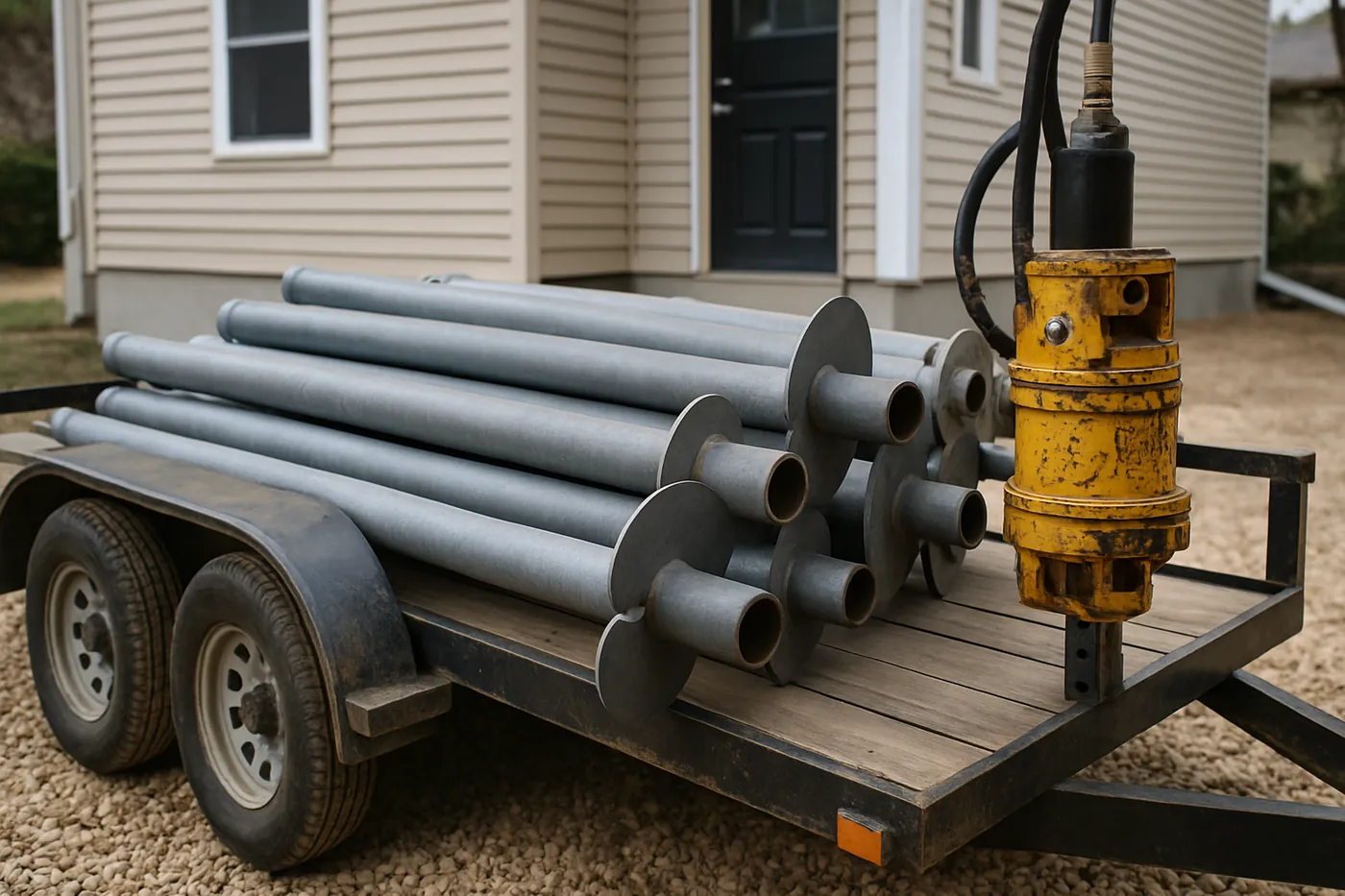
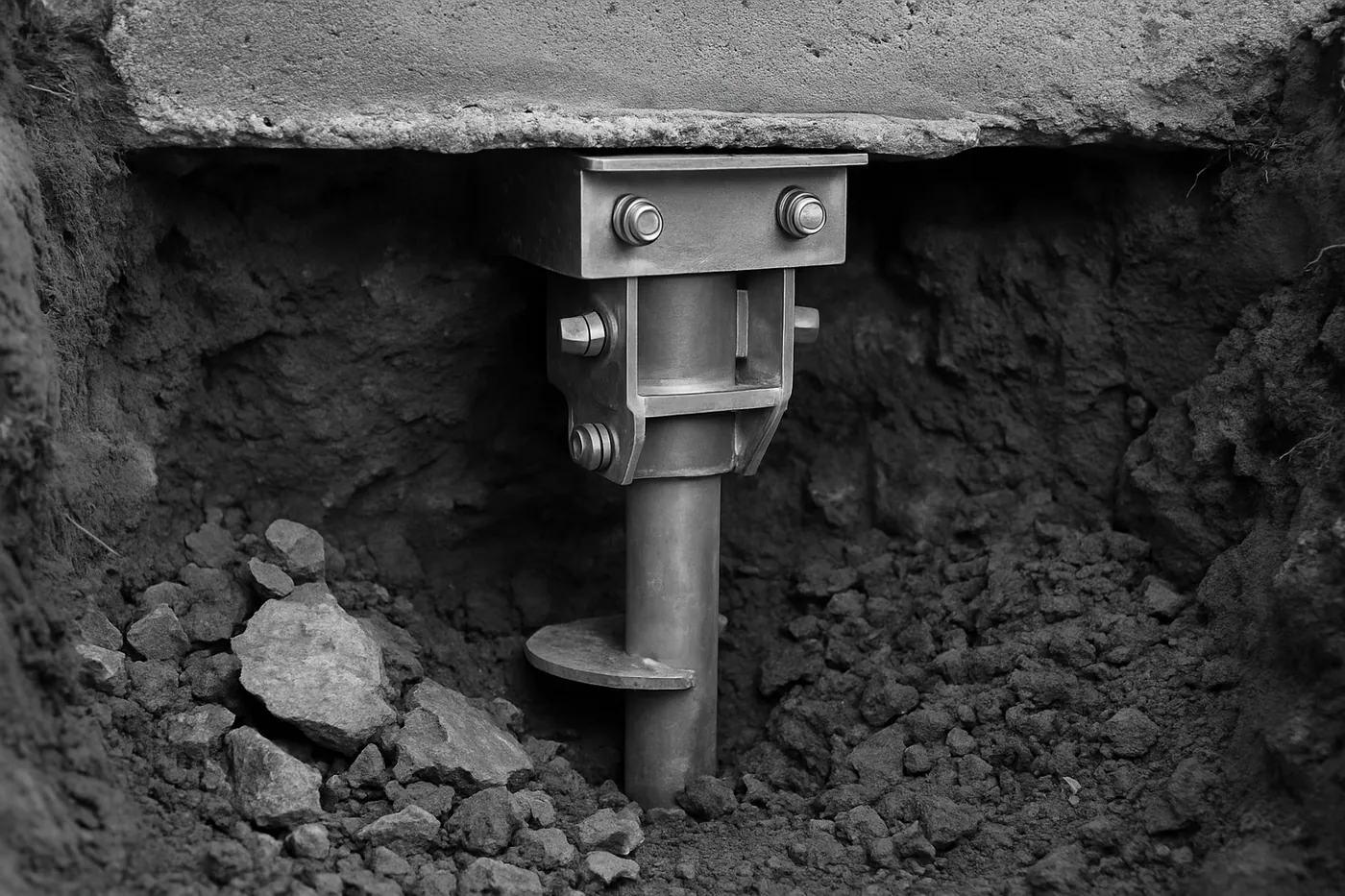
Repairs here aim at flattening the swing: moisture management that keeps the perch from charging (and the summer bake from overshooting), piers to close rock where cycling overshot a footing, and apron and walk lifts for the freeze-worked flatwork. Farm properties get the extended read: outbuildings, cisterns, and old fill lines all join the water story. measured evaluations across every acreage size.
Willard's housing mix
Willard counted about 2,180 housing units in the Census Bureau's 2020-2024 estimates. About 45 percent were built in 2000 or later and about 24 percent before 1980, so newer subdivisions sit alongside older farmhouses and in-town homes. Older farm properties can have foundations that were added to or rebuilt over the years, and the joint between old and new work is a common place for cracks to open.
Updated codes and Greene County's sinkhole standards
Minutes from Willard's July 2024 planning and zoning meeting record that the Board of Aldermen approved updated building codes, so ask City Hall which edition now applies and whether pier or wall work needs a permit. On acreage outside city limits, Greene County's design standards apply. They describe the county as underlain by Mississippian limestone where sinkholes, springs and caves are common, call for avoiding construction in sinkholes, and bar new construction within 100 feet of a cave unless a report shows sound foundations. A homeowner can check whether a lot sits near a mapped sinkhole before planning drainage changes.
Asked in Willard
My farmhouse has an old cistern near the foundation. Does it matter?
Often, yes: abandoned cisterns and their supply lines are premade water concentrators beside old footings, and on karst ground they occasionally connect to more plumbing than anyone remembers. A good evaluation maps them; decommissioning or rerouting is usually simple once located.
Why do open-lot houses crack more than shaded ones?
Amplitude: unshaded clay swings wetter-to-drier and freezes deeper, so the seasonal cycle works harder on the footings. Moisture management flattens the swing; it's why a good Willard scope leads with water even when the complaint arrived as a crack.
Booking in Willard
Fill in the form or call, and the specialist who covers Willard will phone back to schedule. Typical prices for each repair are in the cost guide, which makes it easier to compare two bids line by line.
Get a Springfield foundation evaluation
Tell us what the house is doing (cracks, sinking corners, doors gone stubborn, water where it shouldn’t be) and we'll pass your request on for an evaluation. A local specialist who works in Springfield will call you back.